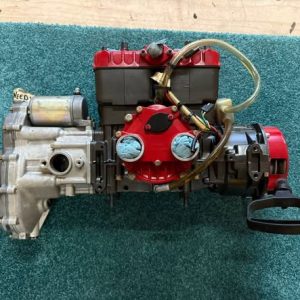
The Rotax 582 “Blue Head” RAVE Engine – Built by Rotax Rick combines familiar Rotax architecture, liquid cooling, compact construction, and installation potential for an appropriately matched light aircraft.
A Rotax 582 Blue Head may also be marketed as a Rotax 582 Blue Head RAVE Engine or Rotax 582 Aircraft Engine when its cylinder-head design, power-valve system, accessories, and build history are verified.
The Rotax 582 65HP Engine designation communicates its general power class, but actual output and operating condition depend on configuration, maintenance, tuning, and test results.
Accurate descriptions help customers compare engine condition, accessories, installation needs, maintenance records, and commercial value.
An Experimental Aircraft Engine may also be considered an Ultralight Aircraft Engine or Light Sport Aircraft Engine when the aircraft design, operating rules, weight, power requirements, and installation data support that use.
Identifying the Rotax 582 RAVE Configuration
The engine should be identified through its data plate, serial number, crankcase markings, cylinder configuration, head design, gearbox, ignition equipment, carburetors, and build documentation.
Informal build descriptions should not replace invoices, measurements, test results, or detailed builder records.
Documenting the Engine Build Process
Clear builder documentation strengthens the engine listing and supports future maintenance planning.
The records should explain whether the work included a complete rebuild, top-end service, crankshaft replacement, seal replacement, gearbox service, carburetor work, ignition inspection, or another defined scope.
Understanding the Rotax 582 RAVE Engine
Carbon deposits, sticking components, damaged diaphragms, incorrect assembly, or worn parts can affect system operation.
RAVE-system condition should be included in maintenance and pre-purchase records.
Two-Stroke Aircraft Engine Operation
Two-stroke engines should not be operated using assumptions drawn from automotive or four-stroke aircraft engines.
The buyer should determine whether the engine uses oil injection, premixed fuel, or another documented lubrication arrangement.
Aircraft Engine Temperature Management
Cooling performance depends on the radiator, coolant Lightweight Aircraft Engine pump, hoses, clamps, fittings, expansion tank, thermostat where installed, coolant condition, and airflow.
The radiator should be sized and positioned appropriately for the aircraft installation and expected airflow environment.
Two-Cylinder Engine Construction
Both cylinders should be evaluated because uneven compression, mixture, cooling, ignition, or wear can affect the complete engine.
Internal clearances and component measurements should be recorded during a documented build.
Managing Fuel Flow to Both Cylinders
Both carburetors should open and close together while maintaining appropriate cable security and throttle travel.
Fuel filters, pumps, lines, vents, tanks, and shutoff systems also influence dependable fuel delivery.
Aircraft Engine Ignition Testing
Complete ignition evaluation supports more dependable operation of the Rotax Aviation Engine.
Spark-plug appearance can provide useful information about combustion, mixture, oil, and cylinder condition when interpreted correctly.
Understanding the Rotax 582 Gearbox
The reduction gearbox allows the engine and propeller to operate at different rotational speeds, helping match engine output with a suitable propeller installation.
Improper propeller loading can affect both engine and gearbox condition.
Inspecting the Rotax 582 Exhaust
The exhaust system forms an important part of two-stroke engine operation and should match the intended Rotax 582 configuration.
Professional exhaust installation supports more consistent Rotax 582 Two-Stroke Engine operation.
Managing Aircraft Weight and Balance
The Rotax 582 is frequently considered where compact dimensions and useful power are important to the aircraft design.
A lighter engine is not automatically suitable if the aircraft requires ballast, structural modification, or a different propeller arrangement.
Matching the Rotax to the Airframe
The Rotax 582 may be considered for ultralights, experimental aircraft, gyrocopters, trikes, powered parachutes, amphibious projects, and other compatible recreational aircraft.
Every custom component should be designed and installed with appropriate clearances, strength, support, and maintainability.
Matching the Engine to a Light Sport Project
The phrase Light Sport Aircraft Engine should be used carefully because aircraft eligibility and engine suitability depend on the exact aircraft, operating category, documentation, and applicable requirements.
Responsible documentation supports long-term Light Sport Aircraft Engine value.
Evaluating Engine Logbooks
A low-hour statement should be supported by logs, invoices, tachometer records, builder documents, or other credible evidence.
Storage after building or removal should also be documented, including preservation and environmental conditions.
Documenting Start and Operating Behavior
A brief start-up video does not establish performance throughout the full operating range.
Professional testing supports responsible evaluation of the Rotax 582 Aviation Engine.
Evaluating Cylinders and Seals
Testing conditions and methods should be documented so results can be understood accurately.
Any abnormal resistance, noise, corrosion, play, or contamination should be investigated.
Aircraft Engine Buying Guide
A pre-purchase review should confirm the exact model, serial number, RAVE configuration, builder documentation, engine hours, gearbox, carburetors, ignition, cooling components, exhaust, run-test results, and included accessories.
- Determine whether the radiator, exhaust, carburetors, air filters, starter, gearbox, ignition modules, mounts, instruments, manuals, and build records are included.
- Confirm whether the engine has been broken in, operated in flight, stored after assembly, removed after a fault, or sold as an unflown project engine.
- Report freight damage, missing accessories, identification differences, leakage, undisclosed repairs, or documentation discrepancies promptly.
Rotax Engine Packaging Requirements
The engine should be secured to a suitable shipping base or crate that supports its weight without loading delicate carburetors, fittings, wiring, cooling connections, or exhaust components.
The crankshaft and gearbox should not carry unsuitable shipping or storage loads.
Integrating Fuel, Cooling, and Electrical Systems
Fuel, cooling, oil, ignition, exhaust, throttle, choke, instruments, starter, and electrical systems should be planned as an integrated package.
Throttle and enrichment controls should move smoothly through the intended range without binding or unequal carburetor travel.
After installation, technicians should verify fastener security, engine alignment, propeller tracking, gearbox condition, fuel flow, carburetor synchronization, ignition operation, coolant circulation, instrument accuracy, and absence of leakage.
Protecting the RAVE Aviation Engine
Service intervals should reflect the exact engine configuration, operating environment, fuel, oil, calendar time, and suitable technical recommendations.
Unverified replacement parts and undocumented modifications should be avoided.
Rotax 582 Price and Installation Costs
Clean appearance and fresh paint may improve presentation but do not replace mechanical inspection.
Commercial evaluation should focus on verified usability rather than appearance or price alone.
Choosing the Rotax 582 “Blue Head” RAVE Engine – Built by Rotax Rick
The Rotax 582 “Blue Head” RAVE Engine – Built by Rotax Rick can provide valuable replacement, restoration, experimental-aircraft, ultralight, or spare-engine potential when its identity, build scope, condition, and compatibility are verified.
The strongest purchasing decision begins with confirming the exact engine model, serial number, RAVE configuration, builder documentation, internal parts, crankshaft history, operating hours, gearbox ratio, carburetors, ignition, cooling system, exhaust, test results, and included accessories.
Whether aviation builders are sourcing an Ultralight Aircraft Engine, Rotax Aviation Engine, or Light Sport Aircraft Engine, professional inspection and installation should precede operational use.
With transparent builder history, protected shipping, correct aircraft fitment, controlled testing, and appropriate break-in procedures, the Rotax 582 can support a professional aviation project.